How to choose a CCTV lens (focal length & field of view)
A wrong lens is the most common CCTV design mistake: too wide and faces are a few pixels, too narrow and half the area is missing. This guide shows how to pick the focal length from the distance and the width you need to see.
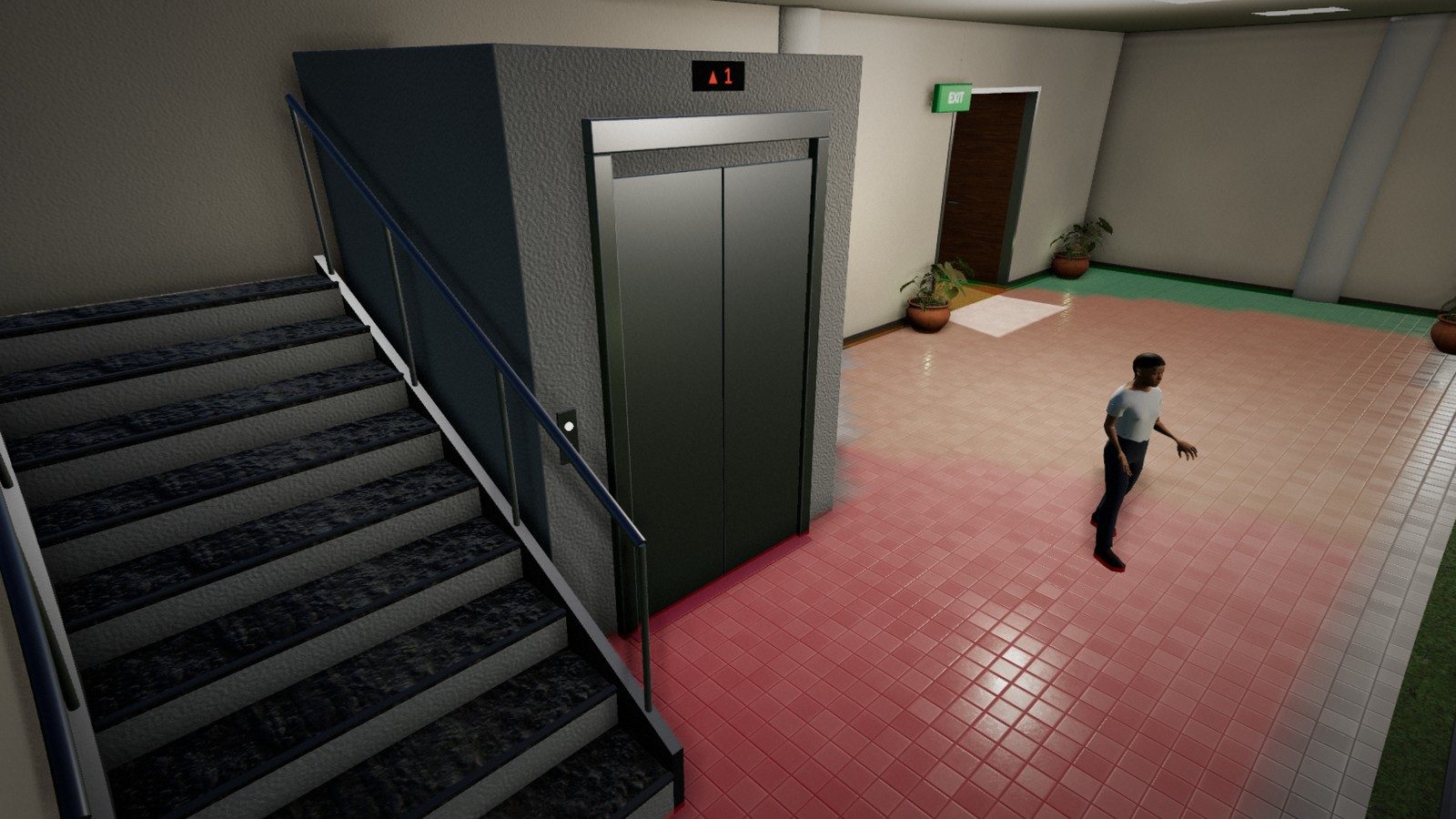
Focal length vs field of view
The shorter the focal length (in mm), the wider the view. Approximate horizontal angles for a common 1/2.8″ sensor:
| Lens | Horizontal view | Typical use |
|---|---|---|
| 2.8 mm | ≈ 100–110° | Rooms, offices, small shops — overview |
| 4 mm | ≈ 80–90° | Corridors, medium rooms, building sides |
| 6 mm | ≈ 50–55° | Entrances, gates, long corridors |
| 8 mm | ≈ 40° | Car-park lanes, perimeter sections |
| 12 mm | ≈ 27° | Long distance detail, plates at the barrier |
Angles change with the sensor size and the camera model — always check the datasheet of the exact camera.
The focal length formula
Example: you need to see a 6 m wide gate from 15 m with a 1/2.8″ sensor (about 5.4 mm wide): 5.4 × 15 ÷ 6 ≈ 13.5 mm, so a 2.8–12 mm varifocal will not reach it; choose a longer varifocal or move the camera closer.
Fixed, varifocal or motorised?
- Fixed lens — cheapest and smallest; perfect when the distance is short and known.
- Varifocal (manual) — the installer sets the zoom on site; useful when drawings are not final.
- Motorised varifocal — zoom and focus from the recorder or the web page; saves ladder work and allows fine tuning after handover.
- PTZ — optical zoom 20–40× for live operator tracking; do not count on it for continuous recording of a fixed area.
Check the result with pixel density
After choosing the lens, check the pixels per metre at the target distance (see the DORI guide). If identification needs 250 px/m and the result is lower, use a narrower lens, a higher resolution or a closer position.
Plan a complete IP surveillance system on your own floor plan: camera positions, field of view, DORI coverage, a realistic 3D camera view, NVR storage and a ready-to-send report. Free, in English, Arabic and French.
Open CCTV Designer Pro →Frequently asked questions
Is 2.8 mm or 4 mm better for CCTV?
2.8 mm covers more area but gives fewer pixels on far targets; 4 mm is usually better for corridors and building sides beyond about 8 m.
Which lens is used to read number plates?
It depends on distance and lane width; a plate needs roughly 250–300 px/m, so 8–12 mm or longer lenses on a narrow lane are typical.
Does a bigger lens number mean more zoom?
Yes — a larger focal length (mm) gives a narrower, more magnified view.
Related guides
How to calculate NVR storage for CCTV cameras
Step-by-step NVR / DVR storage calculation for IP cameras: the bitrate formula, typical bitrates for H.264 and H.265, motion recording, RAID and a free storage calculator.
Read the guide →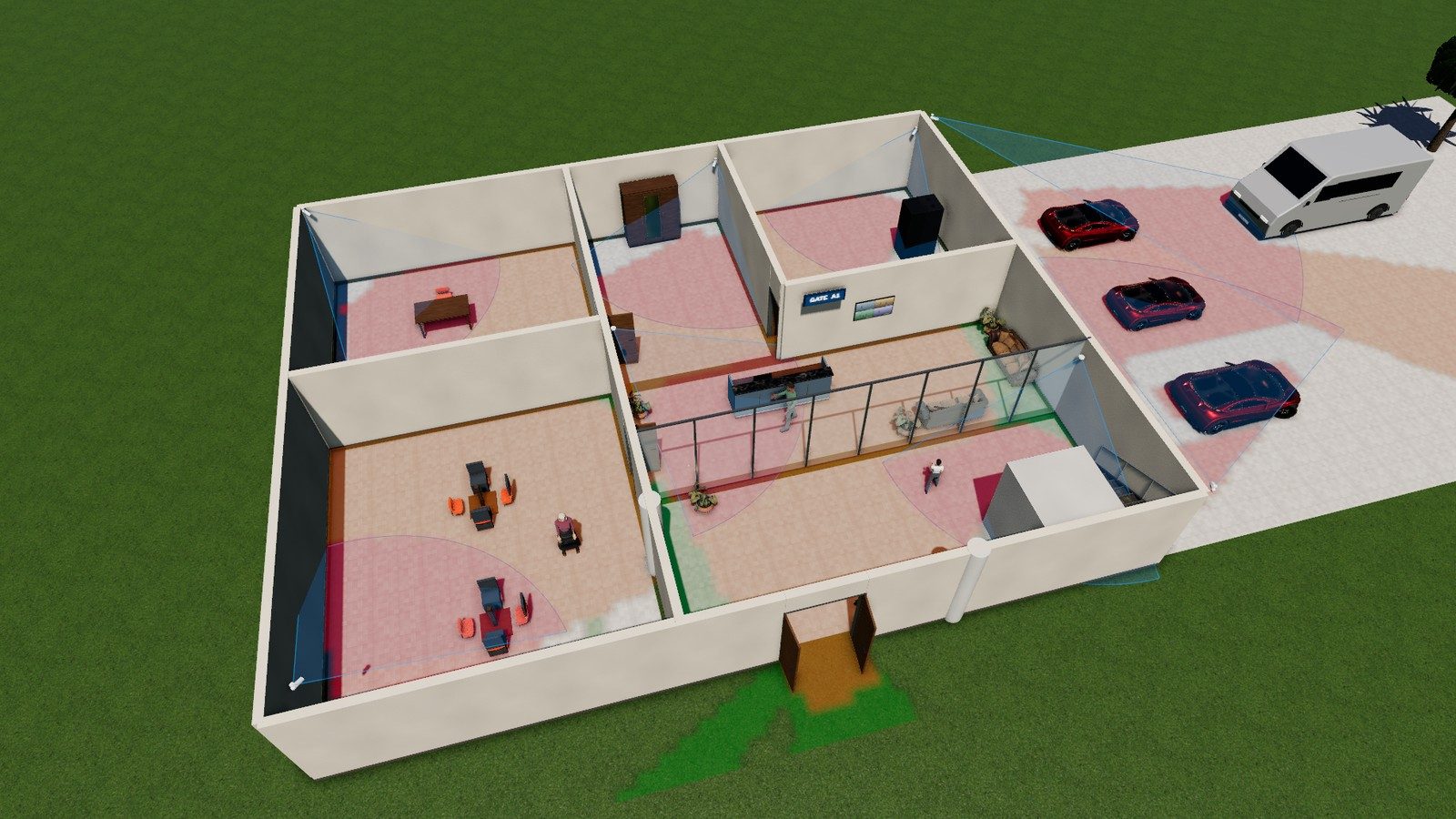
DORI in CCTV: pixel density made simple
What DORI means in CCTV design, the IEC EN 62676-4 pixel-density values (25, 63, 125, 250 px/m), how to calculate pixels per metre at any distance and a free calculator.
Read the guide →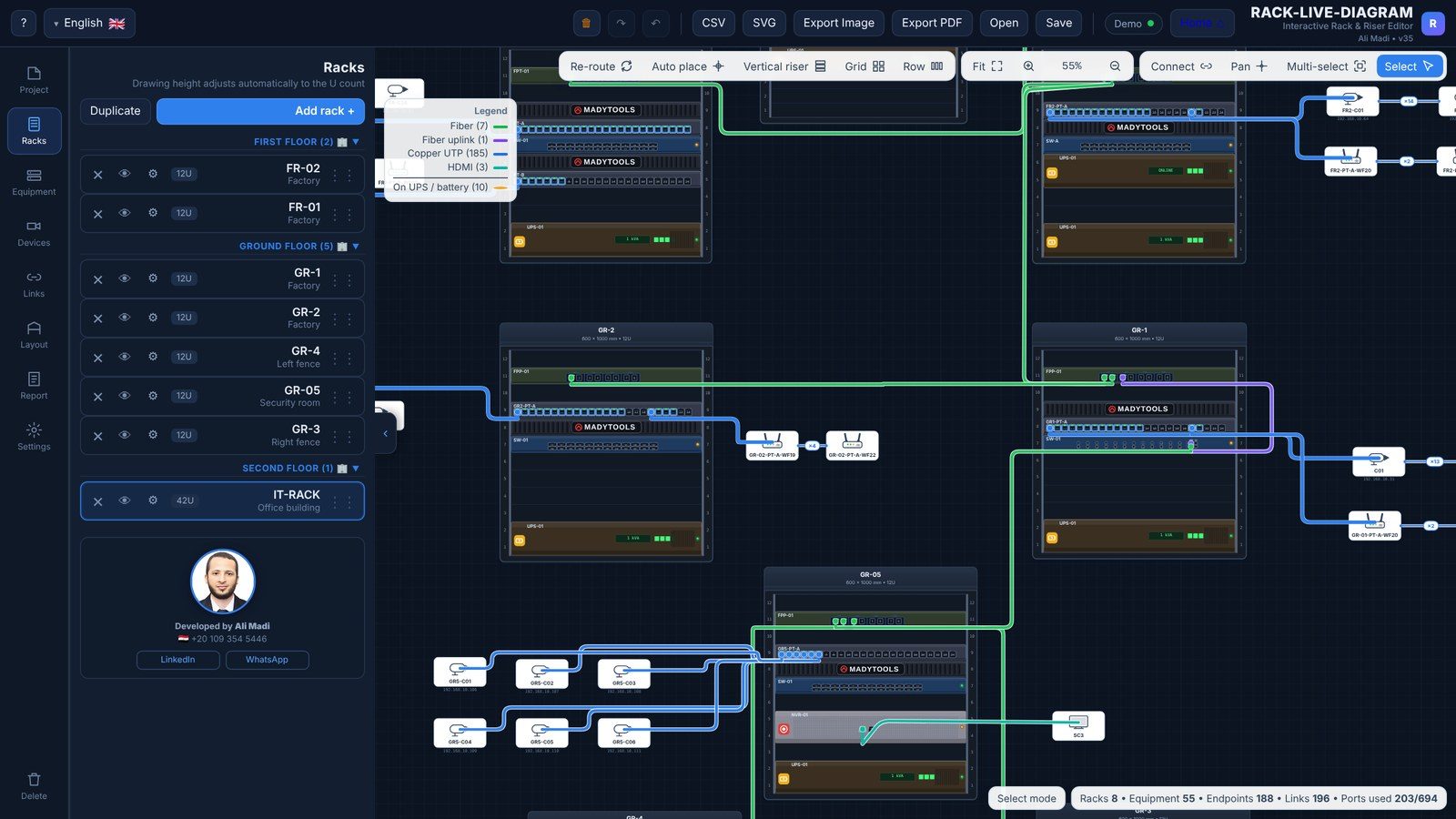
How to draw a 19-inch rack diagram
A practical guide to network rack diagrams: rack unit (U) sizes, 42U rack layout, where to put patch panels, switches, fiber ODF, UPS and PDU, labelling, and how to make the port map.
Read the guide →